
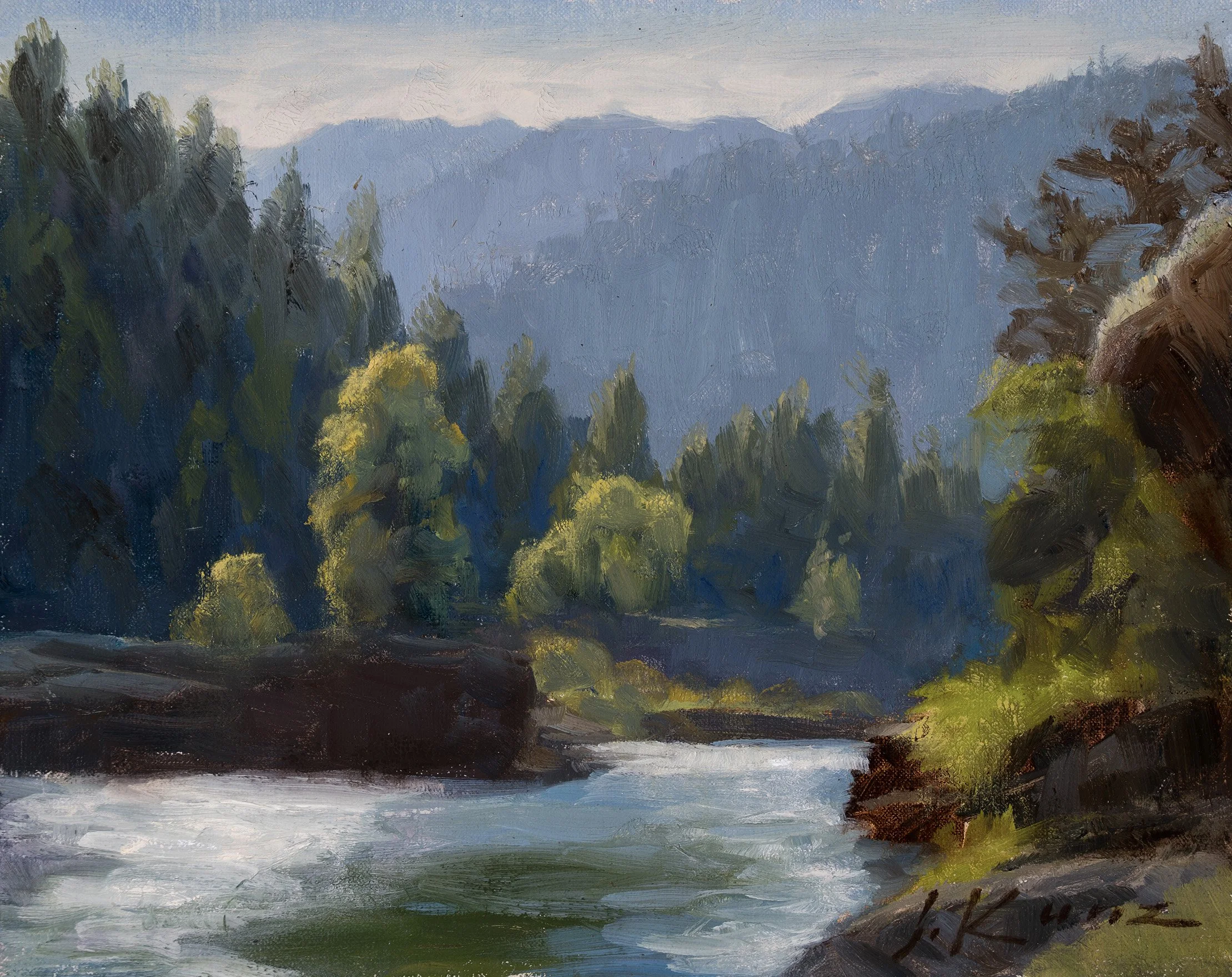
Original artwork: plein-air landscape study by Justin Kunz. Oil on board, 8 × 10”.
Outdoor painting allows artists to capture fresh observations of the light, atmosphere, colors, and forms of the landscape. Painting “en plein air” was first popularized by the French Impressionists in the 19th century. The Hudson River School, California Impressionists, and American Southwest artists continued this tradition across the United States —particularly in locations with mountains, forests, waterfalls, cliffs, deserts, and other dramatic features of the land. Studies painted outdoors on location are imperfect by definition: time limitations and environmental conditions make it especially challenging to capture an authentic sense of place and time. Brush marks tend to be loose and evocative rather than precise or descriptive. Usually small in format, what these studies lack in finish detail, they tend to repay with aesthetic energy and emotional fidelity.